ChatGPT infused Post

After my last post, ChatGPT: Kill it, or Use It?, I thought that I would use that very app to help write this post, and see what all the hubbub was about with this artificial intelligence writer. Of course, I was not going to have it write my whole post, so I thought it might be interesting to highlight with bold italics those paragraphs that I assigned to ChatGPT. It was rather easy once I decided what to ask. It actually helped organize and clarify my thoughts.
I decided to use the discussion topic from this week’s Twitter Chat, #Edchat. I asked ChatGPT to write an objective definition of “Woke”. That is a word that many politicians are using as a cudgel to attack public education and the educators who support education. With that definition we developed the topic: “Woke” is an attitude of awareness that brings together compassion and understanding to create positive social change. Why do some people object to that? Why is it a political issue affecting our education system?
The term “Woke” likely originated in the African American vernacular, initially used to refer to being “conscious” or “aware” of issues relating to social justice. Over the past decade, the term has been adopted by a broader audience and is now commonly used to describe a person who is socially and politically conscious or alert.
The liberal definition of “woke” is to be aware of and actively engaged in the struggle for social, economic, and racial justice. It implies the ability to become knowledgeable about the issues and work to challenge oppressive structures and systems. At its core, being woke means being aware of current forms of injustice, having the courage to call them out, and actively working to bring about change.
The far-right typically defines “woke” as a movement associated with the far-left that is focused on race, intersectionality, and identity politics. It is seen as an attempt to challenge and change the Western and European political, social, and moral order. They argue that it promotes “cancel culture” and an attempt to “de-platform” anyone who does not agree with their views.
After thinking about all that surrounds those definitions, I found myself reflecting on who I am as an educator. I believe that learning is the goal of education. I realize that teachers have limited time with their students, so my greatest contribution to their learning would be to give them the ability to learn and develop skills beyond the confines of the school building and continue to learn for the rest of their lives, lifelong learning. Lifelong learning is the concept of continually acquiring new skills and knowledge throughout one’s life. The key here is that their lives will continue beyond their educators’ lives. It will rely on the tech not yet invented, and ideas not yet conceived. Educators prepare their students to live and thrive in the students’ environment.
In addition, teachers and students have a relationship that enables the teacher to deal with the social and emotional issues of students. Social and Emotional Learning (SEL) refers to the process of developing skills related to recognizing and managing emotions, developing and maintaining relationships, and making responsible decisions. It is an integral part of education, enabling students to become capable and well-rounded individuals.
This is where some politicians claim “Brainwashing” is taking place in our “Woke” education system. Dealing with social issues and how they may affect students emotionally, and personally is a very important part of education. It is not Brainwashing. Brainwashing is a form of coercive persuasion where individuals are subjected to systematic and forceful psychological techniques in order to alter their beliefs, thoughts, values, and attitudes.
As far as the subject matter for educating students, that too has come under attack. We are all aware that February is Black History Month. Twenty-eight days of attempts to show off and quote some of the most famous of black contributors to American History. That whole month tends to lead us to believe that Black History is not American History. It is! Most Americans get their knowledge of the real Black contributions to American History from the movies and TV. I went through the public school system and I was never taught about The Tuskegee Airmen, Juneteenth, the Tulsa Oklahoma massacre, and probably a thousand more Black contributions, as well as an equal number of Black subjugations. I guess we all need to be “woke” about stuff that has affected such a large part of our American population. I don’t take responsibility for slavery, but, as an educator, I do take responsibility to admit and teach that it took place and it was supported by American laws. Contrary to some textbooks, that is why we fought the Civil War.
I grew up in Levittown, New York. My dad was a veteran, so, like thousands of WWII vets, he bought a Levitt home on the GI bill. That is why that community was built, to benefit returning vets. What was never mentioned, but openly known, is that Black vets could not buy a Levitt home in Levittown. Yeah, even as kids we were “woke” to a degree. That by the way was never taught in any of the schools in Levittown.
The educator in me should not be limited to black “Wokeness”. It should apply to any person of color who has been oppressed. It should also apply to people oppressed because of gender bias. It should also apply to the LGBTQIA community as well. As Americans, we seem to have oppressed quite a few groups of people. Many students are connected to these communities, so teachers need to deal with that as compassionately as possible. I guess we need to be “Woke”.
Some people feel it necessary to vilify being “Woke” because they fear the disruption and questioning of the status quo. Of course, that doesn’t make it right! Why do people experience apprehension concerning being “enlightened”? Maybe we need a few more “Woke” politicians.
Is it not our duty, as educators, to teach history and explore its impact on our culture? Should we not also focus on emotional learning and emphasize the importance of empathy? If that is considered ‘woke’, then what is wrong with it? ( I wrote the original thought and asked Chat GPT to improve upon it.)
I am concerned that more educators are not engaging in this debate. Educators are under attack throughout the country. Education is being attacked with censorship, book banning, character assassination, and Don’t Say Gay laws. Perhaps they fear verbal attacks that are not based in fact, but rather bias and ideology. I grew up in a culture that believed that if the facts were on your side, you would always win an argument. I now live in a culture where people cannot even agree on what a fact is, and that is a fact.
I firmly believe we need to have a respectful discussion on what we expect from our educators. The problem with that is many of our politicians are biased against education, viewing it as elitist snobbery. I do not know how to deal with that. All I can do is engage with those who are willing to listen and come to an agreement on facts. I have always been an educator, and I plan to continue what I have done for three-quarters of a century. If we are to better educate our kids, we need first to better educate their educators.
Thoughtful respectful comments are welcomed. Likes are also good.






 It is very difficult to give weight to anything these days except for the conditions that we are now living and dying under, especially as a New Yorker. Time does not stand still however, so we need to assess where we are in order to adjust and move forward. If this pandemic has taught me anything, this would be my lesson learned.
 t in their education. That is a great picture of progressive ideas in education coupling with the advancing strides of evolving technologies to carry us to the next level in the evolution of education. That may get us a short way away from the flying cars that we have always been promised for generations. Of course before any of this can happen we need to address several questions to determine the viability of this wondrous solution.
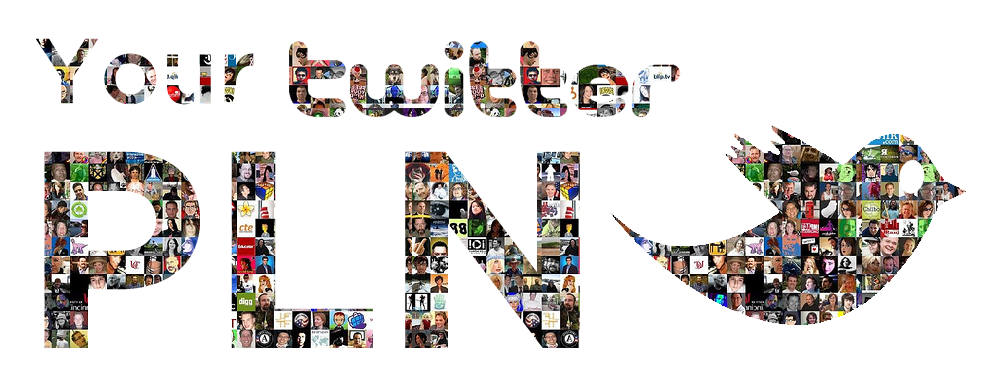 Twitter is the backbone of my PLN. I developed it by considering my “Followings” as professional sources. I follow educators who inform, engage, inspire, or challenge me. I find them on Twitter as they contact me. I find them in education Chats. I find them from hashtags that I follow. I follow Bloggers, P
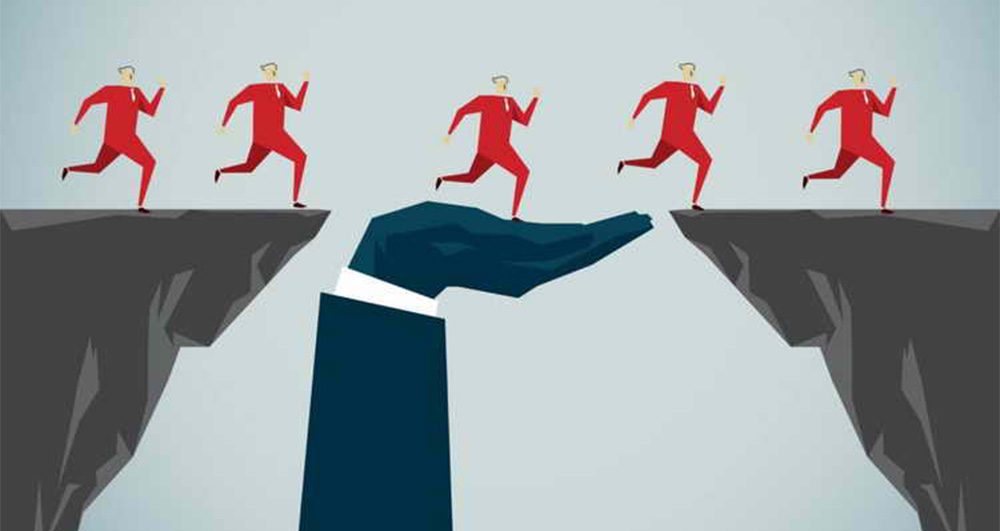 Anyone who thinks that there is one answer to all that is wrong in education is at the very least ill informed. Public education has had hundreds of years to establish practices and procedures that would ultimately slow down any progressive ideas for change. This is the Kevlar vest against any silver bullet that an insightful, forward-thinking change agent might shoot. That seems to be the strategy to protect most bureaucracies, but that being said, there are still many good things happening within the education system.
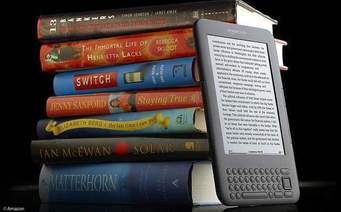 I recently read a blog post about how teachers will never be replaced by technology. The author stated that technology was just a “tool for learning”. This had to be among literally hundreds, if not thousands, of similar posts and comments that I have read over the years. Since I was teaching from the early 70’s, I tended to agree with that way back then. Today, however, I am not so sure that technology in education hasn’t grown into something beyond a “tool for learning”. I often thought that the support garnered for this idea about a “tool for learning”, from educators was based in their fear from an unfounded belief by Sci-Fi authors who often suggested the replacement of teachers by technology in the future. Sci-Fi doesn’t always get it right. Where are the flying cars?










 My Island View