Feeds:
Posts
Comments

Posts Tagged ‘Reform’

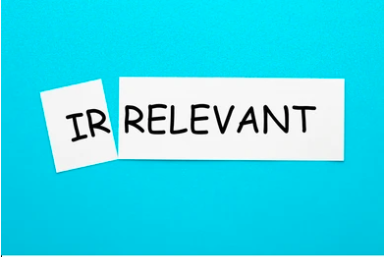
As a veteran teacher of forty years in the classroom, let me be clear, teachers are not completely at fault for becoming irrelevant in their profession. It results from a system that doesn’t prioritize Professional Development for its teachers. It is a system developed in the eighteenth century that devised a way to teach its teachers and the model has been carried on ever since.

At this point in this post, I imagine most educators are “screen screaming” in rage against the idiot who posted it. Then there are some teachers thinking that the post is addressing all those other educators in other districts. If you are still with me on this, I would ask you to consider what I am about to say and self-reflect, considering your own personal educator experiences as they apply to my observations.

I have had a considerable social media presence in education for over a decade. These connections have afforded me relationships with thousands of educators all over the world, but mainly in the USA. This has given me a perspective on many common practices in Professional Development for teachers. One common bond with teachers is their discontent with professional development. Many have experienced large group PD that they were required to attend that did not address their personal needs. Some teachers have had to pay not only for their own PD but they had to absorb having to pay for their own substitute. Most of the PD curriculum is delivered by instructors who lack experience with Andrgogy, adult learning. The biggest complaint is that there is no time provided to teachers for PD. There is also little, if any, follow-up to assess the impact of the PD on learning. There are still a great many schools that do not follow through with a coaching staff directly responsible for aiding teachers in newly learned skills and applications. The list goes on. They didn’t consider these practices in the eighteenth century, so why change things now?

Now in 2025 in the 21st Century, we are faced with a new challenge: Rapidly changing and evolving technology at a rate never encountered before. Most tech from the eighteenth Century until now was long in developing. It was okay to slowly adjust and teach accordingly. “That’s how I learned, so it’s good enough to teach that way” is something we can’t say today and be taken seriously. AI has changed that forever.

Here is the important part: Kids are not digital natives. There is no such thing. It was a term that people uncomfortable with tech made up to feel better about their tech skills when compared to many kids. Yes, kids are comfortable on a computer. They use it to learn things that they like. They are not teaching themselves what they need. They are social media savvy. They download and store music and movies and follow blogs and podcasts. Most don’t go beyond that. They don’t explore the ethics and responsibility of computer use. They don’t understand the real educational uses of Artificial Intelligence and the whole idea of what critical thinking is and how to apply it to their lives. This is where an, educated, understanding and aware educator is needed.

The big obvious problem here, the elephant in the classroom is that many teachers lack the education understanding and awareness that is needed for a 21st Century educator. Here is the important point that must be made: It is not the fault of the educator. AI was not any part of education when these educators went to school. So, if a majority of the teachers in our country’s school system have not been educated in the use, ethics, or impact of what will become a primary teaching tool that will be carried into every aspect of our students’ lives in a world in which they will live, we need to fix it? How do we fix that? Essential, effective, and supported Professional Development that is provided for with both money and time. It must be part of a teacher’s work week and supported by a well-trained coaching staff.

Please make no mistake, AI is going nowhere but more and more embedded in all we do. This is the problem we have in a technology-based culture. Too many teachers are wasting time talking about whether or not AI belongs in school. Of course it does! It’s a tool that workers will need to have the right skills for in order to have more choices in jobs.

Let us stop talking about kids cheating at what they do. We put them in that position. If you feel they will cheat on their homework with AI, stop giving homework. Have them work with you in class developing brainstorming, critical thinking, refinement and a dozen other skills using AI. Model what you do in class in your personal use of AI. In order to do that teachers need an understanding of AI to see how it applies to their subject and their everyday tasks. If they don’t I am sure their students will on their own. If a teacher is irrelevant and not meeting the needs of the student, the kid can learn on his or her own. Left to their own devices however, the outcome could be akin to that of what we now have with social media. That could be disasterous.

This is not to say that we can’t teach the basics of what we need to teach. An understanding of PD has become essential in education. It does mean that the job will become more labor intensive in an already stressed environment. It is up to administrators to recognize this and adjust accordingly with time support and money. If better PD is to work it won’t work without major changes. The first thing is to make it something of value for teachers and not mandated BS to check-off-the-box with a provided lecture. Develop a PD program with faculty and education experts. Be careful! We have too many AI experts for a tool that has only been here for about three years.

If teachers are irrelevant it is mostly the fault of the districts. They are being required to teach with tools that were not available in their own education. That is where valuable professional Development pays off. We can change things for the 21st Century and benefit from all it has to offer. It is way more than they had back in the eighteenth Century. If we are to better educate our kids, we need first to better educate their educators.

Read Full Post »

I was somewhat disturbed about a recent post by a friend and connected colleague concerning the state of Twitter and its use by some individuals in what is now fast becoming the education social media culture. My friend seemed to be longing for the “good ole days” of Twitter when it was smaller numbers and people knew their place in their interacting with others. I remember those days as well, since I was on Twitter years before my friend. I think my perspective and take-aways on this are a little different.

I see the benefits of having a collaborative tool like Twitter to improve the profession of teaching. Twitter enables educators to easily and quickly exchange content in the form of links to other educators. The very things that need to be exchanged for collaboration include: articles, posts, movies, podcasts, websites, whitepapers, videos, interviews, and now even books. Twitter is not the format that one uses for exchanging ideas requiring deep thought and reflective exchanges. Twitter does however enable educators to drive traffic to places where those exchanges may take place. I personally do not consider Twitter as a form of Professional Development, but rather a bulletin board that directs folks to the places that they can get personalized professional development. It is that ability for educators to self-direct their intellectual growth and skill improvement that has led me to push to grow this social media culture for many years now.

Back in the day before Twitter there was little transparency in education. Teachers were trained in education courses from colleges, many of which were slow to change from 19th and 20th century models of teaching. They were then placed in a job that was governed by the culture of the school to which they were assigned. Collaboration, to whatever level it existed, was limited to a building or district. Those educators who were invited to attend them attended education conferences. It was also a matter of whom the budget allowed for conference attendance. The speakers at these conferences were often administrators who brought along their lead learners to share their best and most progressive lessons in sessions with others. Keynotes or highlighted session speakers were often celebrities, authors, administrators, consultants, vendors, or even politicians. Social Media has changed that for educators. Educators, many of whom gained prominence by sharing with others through social media, are dominating today’s conferences.

Sharing Is Not Bragging. The whole condemnation of self-promotion is a little ridiculous since to a degree everyone on social media self-promotes in order to get their message out to a larger audience. Using your voice to a limited audience seems counter productive. There are some who do it too often, but it is a public platform. We can’t regulate what others tweet. Of course the irony of many bloggers writing about, or condemning self-promotion is that they often self-promote within their own blogs or tweets to drive traffic to their posts. It is the best way to share ideas with a larger audience. Yes, there are “Rock Star” educators on Twitter, but that more often comes from sharing great ideas. If I might indulge in some self-promotion here; I direct you to A Rock Star, not by choice.

I hate that we have, what I refer to as, Drive-by presenters at conferences. They fly in for a session or keynote and fly out immediately after their delivery. The fact of the matter is that they did share needed info with a larger audience and as much as I hate their not sharing further with more personal interactions with conference participants, they do offer what people often need to hear. That is the goal we want to achieve.

My friend also seemed to be down on those who only RT tweets. Re-Tweeting serves several purposes. First it allows novice tweeters to somewhat engage in Twitter as they learn the culture. I RT frequently when I find great tweets so that my followers, who may not have gotten that tweet, may benefit from it. Yes, there are some who never get beyond the RT phase of tweeting, but that is their choice and loss. We need not judge them for that. I also discovered the power of an RT lies in how good the original Tweet is. If one RT’s really smart Tweets from really smart people, She/he is credited for that tweet and those smarts, as well as the original tweeter. It does build a following, but if it is not followed by original thoughtful tweets, that following may be short-lived.

One other thing that we must all keep in mind is that Twitter is Social Media. That word “social” opens the door for folks to talk about whatever the hell they want to talk about. Most of my followers know my Friday’s are Pizza and wine nights. That has nothing to do with education, but everything to do with me. Twitter is based on relationships. Often those relationships come with more than just exchanging links.

An important fact that my friend overlooked in the post is that we each have a responsibility to pick and choose that we trust to follow in our personalized learning networks. That is what makes them personalized. I would suggest to anyone who uses Twitter, that if for any reason someone does not strike a chord with you, UNFOLLOW him or her. I would also caution you to maintain people who disagree, as opposed to those who are just being obnoxious. That disagreement will promote deeper reflection on the very things you need to reflect on. That is why I read posts that I do not always agree with.

The very strength of Twitter comes from it being open. It affords access and transparency to education that has never been afforded before. It is also new to many educators who need time to adjust and fit in. We best serve our followers by modeling Twitter the best way that we can, but we can’t tell others what they must do to fit in. Eventually, everyone will get it. We must be tolerant of those who get it but choose to game the system. This sounds like real life outside the classroom. Control and compliance don’t seem to fit into social media. What is different is that we can pick and choose who to follow and how much to engage them. It’s all about the personal learning. By the way this is just my opinion and has no direct bearing on whatever you choose to do in your social media interactions.

Read Full Post »