
Do educators ever self-reflect on how they feel about their students in order to better understand how they assess each of their students? What are the considerations educators take into account while making such judgments? Is each student measured and weighed the same as every other student? If grading a piece of work requires a more subjective assessment, is a teacher really capable of assessing that work by each of his/her students, equally with the exact same bias-free subjectivity?
I know my answer would be sure, I view all my students the same. I am always fair and objective with every assessment. Of course, that would not be true, because I am human. There are things I favor, believe, love, and hate, as a result of my upbringing, education, spirituality, and life experience, all of which will affect every decision I make in life.
I guess I am asking how can educators be objectively unbiased when making subjective assessments of not only their students’ work, but their students as people as well? Teachers will make small decisions and judgments that when added up over a year will paint a certain picture of that student. Over 12 years of schooling does every student have an accurate picture of who they are, or are some kids a product of profiling by dozens of teachers’ biases?
Biases are not necessarily bad. Early on in life, we are asked about a favorite color, favorite type of music, favorite sport, and favorite player? We are programmed to like and consequently dislike. Our families also usually give us values, and spirituality. Teachers help form our academic beliefs. Life or “the school of hard knocks” often fills in the gaps with other beliefs. The end result is that everyone is an individual with unique beliefs and biases with hopefully an anchoring to societal norms.
What biases might a classroom teaching experience that would affect their ability to serve the best interests of their students? (Prompt ChatGPT)
Classroom teachers may experience various biases that can affect their ability to serve the best interests of their students. Some of these biases are:
- Confirmation bias: This bias occurs when a teacher searches for or interprets information in a way that confirms their existing beliefs or attitudes. This can lead to the teacher ignoring or dismissing information that contradicts their beliefs or attitudes, leading to inaccurate assessments of students’ abilities and needs.
- Stereotyping: Teachers may hold stereotypes about certain groups of students based on their race, ethnicity, gender, socioeconomic status, or other characteristics. These stereotypes can influence the teacher’s expectations of the students and their ability to succeed, which can lead to lower expectations and opportunities for those students.
- Halo effect: This bias occurs when a teacher’s positive impression of a student in one area leads them to assume the student is strong in all areas. For example, a teacher may assume that a student who is well-behaved and polite must also be academically strong, leading to a lack of attention to areas where the student may be struggling.
- Implicit bias: This bias is an unconscious preference or prejudice that can influence a teacher’s perceptions and behaviors. For example, a teacher may have an implicit bias against students who speak with accents or who come from different cultures, leading to a lack of understanding or support for those students
- Self-fulfilling prophecy: This bias occurs when a teacher’s expectations of a student’s behavior or performance lead to that behavior or performance becoming a reality. For example, a teacher who expects a student to be disruptive may treat that student differently, leading to increased disruptive behavior.
It is important for teachers to recognize and address these biases in order to serve the best interests of their students and provide an equitable learning environment.
Teachers can work to overcome biases by seeking diverse perspectives, reflecting on their assumptions and beliefs, and implementing evidence-based strategies that support all students.
Self-reflection is one of the most important parts of good teaching, but it does not come easily. It requires a teacher to look inside to identify those biases that may affect their students. This is not something young teachers can usually do. I found that it comes with experience. I am a big believer that through time, we do become wiser. With age, we have a compendium of experiences to call upon for a more comprehensive self-reflection.
Some of these biases are very subtle. A teacher might have key students who that teacher most often calls upon in discussions, knowing that they will answer well, and move the discussion along. Of course contributions from the rest of the class go unrecognized.
Another bias probably more prevalent than we would care to admit is a bias for males over females, or females over males. This has a profound effect on learning. My youngest daughter is finishing up a Doctorate in Math. She has had classes of predominantly male students throughout her academic career. Of course, this is not news to STEM teachers.
A really gutsy lesson a teacher could do is to discuss biases with a class of students. After everyone understands bias, list the teacher’s biases, and sharing these biases with the class. If the teacher is really open to change, it will be helpful when the students point out the teacher’s biases when they see them pop up throughout the year. That is authentic learning that makes a difference.
Being a successful educator requires more than academic knowledge of a subject. It will take a constant effort to self-reflect and improve skills in developing relationships. It is through successful teacher-student relationships that quality learning thrives. If we are to better educate our students, we must first better educate their educators.
 It is very difficult to give weight to anything these days except for the conditions that we are now living and dying under, especially as a New Yorker. Time does not stand still however, so we need to assess where we are in order to adjust and move forward. If this pandemic has taught me anything, this would be my lesson learned.
 With the cloud of the Corona Virus hanging over us and growing by the hour, it is difficult to see any silver lining. Health and safety are our greatest concerns. The stakes are high and the consequences may be fatal to too many. Anything I discuss here should not in any way diminish the seriousness of our condition. The consequences of our nationwide quarantine however, may be having a profound positive effect on our education system. From an education perspective, there may be a silver lining to one of the darkest clouds to ever cover this country.
 Change is inevitable and with the influence of technology it happens faster today than ever before in history. The first mobile phone call was made 45 years ago April 3, 1973, but the first true smartphone actually made its debut in 1992. In less than three decades we have redefined the purpose of a phone to be a mobile computer and camera with phone capabilities as one of its many functions. Beyond the communications industry technology-influenced changes have had a great effect on the film industry, the record industry, the typewriter industry, the media industry, the photography industry, and many, many more. In every case a reevaluation took place to assess what each industry had to offer and how technology could improve their product. Some industries benefitted greatly by the change. Unfortunately, many others were deemed obsolete in our technology-driven culture, causing their demise rather than their transformation.
 As adults we generally learn about things that we need to learn about. Of course we also have an opportunity to learn about things we would like to learn about. We do not have anyone assigning us projects, or books or exams for which to prepare. The exception to that would be the job requirements in a job that we have chosen. Theoretically, we work in a job that has some personal appeal, and the required learning for that job is something that ultimately, we have chosen to accept. When what appeals to us about that job wanes, we hold on to that job only as long as it takes to find another with a better, more appealing position. The learning and application of that learning again is a choice that we make for that new position. The learning is relevant in our new role.
 , the New York State ISTE affiliate organization. It is a favorite conference of mine, since I served as a board member of that organization for about six years. It is also both comprehensive and progressive in the way of education conferences. As with all education conferences it is easy to identify what trends in education have been most popular over the last year by the number of sessions being offered on any given subject. I was delighted to see that there were several sessions on Professional Development, which is what I believe to be a key in improving our education system.
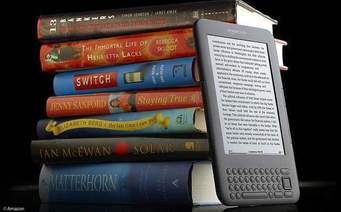 I recently read a blog post about how teachers will never be replaced by technology. The author stated that technology was just a “tool for learning”. This had to be among literally hundreds, if not thousands, of similar posts and comments that I have read over the years. Since I was teaching from the early 70’s, I tended to agree with that way back then. Today, however, I am not so sure that technology in education hasn’t grown into something beyond a “tool for learning”. I often thought that the support garnered for this idea about a “tool for learning”, from educators was based in their fear from an unfounded belief by Sci-Fi authors who often suggested the replacement of teachers by technology in the future. Sci-Fi doesn’t always get it right. Where are the flying cars?
 If a doctor, who is faced with a patient exhibiting multiple symptoms of an unknown disease, were to address each of the symptoms rather than addressing the disease itself, he/she might find the outcome for that patient to be disastrous in the long run. The patient might have had the symptoms lessened, but the disease would eventually win out with a poor outcome for the patient.
 Often in teacher preparation classes students are asked to develop an education philosophy based on their course studies and observations, or student teaching experiences. For many of these students who go on the pursue careers in education, that might be the only time anyone asked for that philosophy. Of course the best time to develop any philosophy on one’s overall impact of a career may not be to do it before one enters and experiences the full force of that career over a period of time. This is a discussion I often had with my student teachers. They should develop an education philosophy, but it should never be etched in granite, especially with their limited teaching experiences. By the nature of the job, changes are to be inevitable, so self-reflection and flexibility are important elements that must be requirements of the profession at any level.
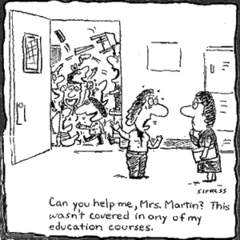 Several decades ago I read an article that I believe was in Time Magazine on the most difficult jobs in America. The article defined a difficult job based on the number of impactful decisions a person had to make in a day. Listed, as one of the most difficult jobs, was that of an eighth grade English teacher. I was surprised to read that, but I was in full agreement, since I was at the time an eighth grade English teacher. A decision is made by considering the information available and making a choice, or taking a course of action. The best decisions can be made when the best and most complete information is available.










 My Island View