
Do educators ever self-reflect on how they feel about their students in order to better understand how they assess each of their students? What are the considerations educators take into account while making such judgments? Is each student measured and weighed the same as every other student? If grading a piece of work requires a more subjective assessment, is a teacher really capable of assessing that work by each of his/her students, equally with the exact same bias-free subjectivity?
I know my answer would be sure, I view all my students the same. I am always fair and objective with every assessment. Of course, that would not be true, because I am human. There are things I favor, believe, love, and hate, as a result of my upbringing, education, spirituality, and life experience, all of which will affect every decision I make in life.
I guess I am asking how can educators be objectively unbiased when making subjective assessments of not only their students’ work, but their students as people as well? Teachers will make small decisions and judgments that when added up over a year will paint a certain picture of that student. Over 12 years of schooling does every student have an accurate picture of who they are, or are some kids a product of profiling by dozens of teachers’ biases?
Biases are not necessarily bad. Early on in life, we are asked about a favorite color, favorite type of music, favorite sport, and favorite player? We are programmed to like and consequently dislike. Our families also usually give us values, and spirituality. Teachers help form our academic beliefs. Life or “the school of hard knocks” often fills in the gaps with other beliefs. The end result is that everyone is an individual with unique beliefs and biases with hopefully an anchoring to societal norms.
What biases might a classroom teaching experience that would affect their ability to serve the best interests of their students? (Prompt ChatGPT)
Classroom teachers may experience various biases that can affect their ability to serve the best interests of their students. Some of these biases are:
- Confirmation bias: This bias occurs when a teacher searches for or interprets information in a way that confirms their existing beliefs or attitudes. This can lead to the teacher ignoring or dismissing information that contradicts their beliefs or attitudes, leading to inaccurate assessments of students’ abilities and needs.
- Stereotyping: Teachers may hold stereotypes about certain groups of students based on their race, ethnicity, gender, socioeconomic status, or other characteristics. These stereotypes can influence the teacher’s expectations of the students and their ability to succeed, which can lead to lower expectations and opportunities for those students.
- Halo effect: This bias occurs when a teacher’s positive impression of a student in one area leads them to assume the student is strong in all areas. For example, a teacher may assume that a student who is well-behaved and polite must also be academically strong, leading to a lack of attention to areas where the student may be struggling.
- Implicit bias: This bias is an unconscious preference or prejudice that can influence a teacher’s perceptions and behaviors. For example, a teacher may have an implicit bias against students who speak with accents or who come from different cultures, leading to a lack of understanding or support for those students
- Self-fulfilling prophecy: This bias occurs when a teacher’s expectations of a student’s behavior or performance lead to that behavior or performance becoming a reality. For example, a teacher who expects a student to be disruptive may treat that student differently, leading to increased disruptive behavior.
It is important for teachers to recognize and address these biases in order to serve the best interests of their students and provide an equitable learning environment.
Teachers can work to overcome biases by seeking diverse perspectives, reflecting on their assumptions and beliefs, and implementing evidence-based strategies that support all students.
Self-reflection is one of the most important parts of good teaching, but it does not come easily. It requires a teacher to look inside to identify those biases that may affect their students. This is not something young teachers can usually do. I found that it comes with experience. I am a big believer that through time, we do become wiser. With age, we have a compendium of experiences to call upon for a more comprehensive self-reflection.
Some of these biases are very subtle. A teacher might have key students who that teacher most often calls upon in discussions, knowing that they will answer well, and move the discussion along. Of course contributions from the rest of the class go unrecognized.
Another bias probably more prevalent than we would care to admit is a bias for males over females, or females over males. This has a profound effect on learning. My youngest daughter is finishing up a Doctorate in Math. She has had classes of predominantly male students throughout her academic career. Of course, this is not news to STEM teachers.
A really gutsy lesson a teacher could do is to discuss biases with a class of students. After everyone understands bias, list the teacher’s biases, and sharing these biases with the class. If the teacher is really open to change, it will be helpful when the students point out the teacher’s biases when they see them pop up throughout the year. That is authentic learning that makes a difference.
Being a successful educator requires more than academic knowledge of a subject. It will take a constant effort to self-reflect and improve skills in developing relationships. It is through successful teacher-student relationships that quality learning thrives. If we are to better educate our students, we must first better educate their educators.
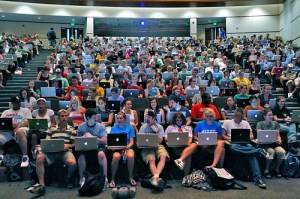 I recently read yet another article that questioned the effect of using technology in education. I believe it stated that there are 3.6 million educators using edtech as the basis for the post. The post itself was well done, but throughout my reading I was troubled by what defined an edtech-using educator. How is it determined that an educator is truly an edtech user?
 Like many people my first foray into the virtual world of connectedness was through Facebook. I connected with family and friends. This led me to consider making some professional connections out of necessity. I began my connected collaboration as an educator over a decade ago. I realized as an adult learner that I learned best through collaboration and that collaboration could only take place if I was in some way connected with other educators. I feel that I had grown to a point where my teaching colleagues, whom I had face-to-face contact with, seemed to somehow no longer have answers to my questions. It was apparent to me that their own profession was getting away from many of them. They depended too heavily on what was taught about education years ago rather than what was currently being taught. They had no connection to the latest and greatest in education. Their knowledge and experience was losing relevance. My building connections no longer served me well enough to meet my needs. I needed to expand my collegial base to more educators who were more in tune with education demands of the 21st Century. My building limited me.
 about teaching is that teachers not only need to be masters of content within their subject area, but they must also be masters of education as a subject. Another undeniable fact is that neither of those subject areas looks the same as when any teacher first mastered them. One effect of the integration of technology into our society is that change in almost everything is happening at a pace never before experienced by mankind. As much as some people may yearn for the simpler times of the past, life will continue to move forward as the natural order of society requires.
 I was afforded a great opportunity yesterday. After a large local education conference, I attended a get together of a number of people who had gone through or are presently participating in the same masters program for educational technology that I had completed in 1991 from Long Island University. It was a social gathering but the topic of every conversation was of course education.










 My Island View