 It is very difficult to give weight to anything these days except for the conditions that we are now living and dying under, especially as a New Yorker. Time does not stand still however, so we need to assess where we are in order to adjust and move forward. If this pandemic has taught me anything, this would be my lesson learned.
When it comes to the American education system, I have experienced it in many ways and on many levels. I have been a student, a teacher, professor, a supporter, a critic, a follower and a leader. Now I deal with education as a speaker, writer, blogger, and podcaster. My focus in life has always been in education. As a critic I often engaged in theoretical discussions of how we could improve the system if we blew it all up and started anew. These were obviously theoretical discussions since a national education system cannot be physically blown up.
March of 2020 changed all that. March 2020 is when the American education system was blown up. There is no mistake about that. Schools were shut down. Testing was cancelled. Teachers were told not to concern themselves with grades, and even sports were stopped. All school related events were halted. The system, as we have come to know it after 200+ years, was shut down. It was blown up by the Covid-19 virus pandemic.
There was only one possibility available to educators. They immediately ran to the alternative that was discussed for the last decade. We have the technology! Why not transition the entire system to remote learning? Let’s mandate remote learning. Administrators will lead remotely, teachers will teach remotely, students will learn remotely. We have talked about it for years, so why not? That seemed like a sound fix for the problem, especially if it was to be a short-term need.
Well, the fix was not so simple. Although we have talked a great deal about remote learning over the last decade, we haven’t really taught teachers to do it. Since the actual practice of remote learning has been limited, few students are proficient, or even experienced in it. Many teachers and students are not even comfortable with it.
As educators we have also learned that Maslow truly comes before Bloom in learning. We need to address the emotional and physical needs of students before any learning can take place. Unfortunately, in a highly stressed environment, we have added more stress on teachers and students. We have not created stability, but rather added to the chaos in a very chaotic environment. It is amazing that many, if not most, educators have risen above all of this to make the best of a very bad situation.
Educators at every level have strived to use the technology to collaborate in finding solutions and methods to help themselves and their students through this mess. They strive to collaborate through catastrophe. By experiencing the use of technology in learning, the teachers are as much students as the younger people they are charged to teach. This may go a long way in accomplishing what countless sessions of professional development could not deliver. Experience is always the best teacher.
We have very quickly identified many problems with remote teaching. The greatest problem exposed is the digital divide caused by the economic divide. Zip codes still determine quality of education even more in a digital system. There are many drawbacks in digital systems that were less of an obstacle in face-to-face environments. Absenteeism is a big problem in remote learning. Getting to kids of large families with only one digital device in the family is a big issue. Having kids supervised at home can be a problem for many as well. Giving individual time to each student digitally is another problem that needs to be addressed.
Teachers need to shift their focus from summative assessment for grading purposes to formative assessment for actionable feedback. Teachers need to understand that piling up more work does not translate to more learning. Administrators need to learn that leading is much better that mandating. Collaboration is key to learning. If you have a thought share it. An idea not shared is just a passing thought. Sharing and modeling best practices is not bragging. Yes, these are phrases used all the time, but that doesn’t make them less important or less truthful. They were true in a classroom setting and they are true online as well.
My fear is that, when we come to an end of this catastrophe, which we now find ourselves in, we will look to assessing remote learning with a skewed perspective. We have come to grips with the priorities of the brick and mortar environment of our education system and found them in need of realignment. Teachers are trained for the classroom. Teachers have been programed for an environment of control and compliance. Their experience and training have little to do with student voice and choice in learning. Collaborative learning too often takes a back seat to lecture and direct instruction. These are tailored to classroom learning and far less effective in remote learning.
We need an honest look at both the classroom model and the remote model for learning and adjust accordingly. Face–to-face relationships between teachers and students are the best conduits for learning. Developing skills in students to be self-motivated and tech savvy to research, curate, communicate and create, as lifelong learners should be the goal of every educator. In our computer-driven world this will happen online.
We cannot look at the remote teaching and learning that is going on during this crisis as the model for online learning. Most of the teachers and students thrown into this were not prepared for, or equipped for any of this to happen, much like our medical community in handling this virus. We need to return to a system that will now and forever support a professional development system that is continual, supportive, relevant and adaptive. We cannot expect our students to strive for the best, ongoing, life-long education possible, if their teachers, mentors, and role models are not striving for that as well. We cannot waste one of the rare opportunities that this horrible disaster may have afforded us. Let us consider blending the best of both systems to reprioritize our goals for education, as well as the methods that we may use to get to those goals. We must be proactive in improving our teachers, which will in turn improve our students. It is not a passive exercise. It will not happen on its own. It will take a new mindset and of course money. Education is the best defense our country can have. Its value is worth the cost.
 With the cloud of the Corona Virus hanging over us and growing by the hour, it is difficult to see any silver lining. Health and safety are our greatest concerns. The stakes are high and the consequences may be fatal to too many. Anything I discuss here should not in any way diminish the seriousness of our condition. The consequences of our nationwide quarantine however, may be having a profound positive effect on our education system. From an education perspective, there may be a silver lining to one of the darkest clouds to ever cover this country.
 , the New York State ISTE affiliate organization. It is a favorite conference of mine, since I served as a board member of that organization for about six years. It is also both comprehensive and progressive in the way of education conferences. As with all education conferences it is easy to identify what trends in education have been most popular over the last year by the number of sessions being offered on any given subject. I was delighted to see that there were several sessions on Professional Development, which is what I believe to be a key in improving our education system.
 It has been quite awhile since I have written a post. I think I might be in a state of depression as a result of my addiction to television News shows and the recent development of an affliction that I refer to as “screen screaming”. Getting beyond the political turn of events of recent history, I also find myself frustrated and depressed over the slow pace of change in education that we have witnessed since the turn of the century. Why is it that so much of what education thought-leaders have been advocating for, in order to dramatically change the education system for the better, has yet to take root in any significant way? Many of the practices that have been identified as stymieing the system are still common practice in too many school systems today.
 n the hands of some of the most educated members of our society who have the greatest effect on future generations has had somewhat mixed results.
 This year I made a few changes to my WordPress Blog site. I removed all of the ads that WordPress placed on it and I now use my name as the domain name to more easily traffic readers to the site. As I did these things at a minimal cost, I questioned whether or not it was worth the effort. I questioned if any of the time, effort or money that I have committed, and continue to put in to all of this, is really worth it. Does the average person even know or understand what a blog is? Do professionals understand how blogs influence their profession? Are teachers using blogs as both relevant reading and writing tools? Are students using blogs to create their voice? Do people in general see any importance in blogging to reflect, question, criticize, or improve the world in which we live? Do blogs have a value in our world today that is at least understood, if not appreciated, by those who should? Does the access to blogs require too much tech savvy, critical thinking, and a mindset different from the 20th Century to prevent the acceptance of blogs as a change force in our 21st Century world? Will a large enough group of people even read this post to make a difference or will people need to print it out to share copies with others?
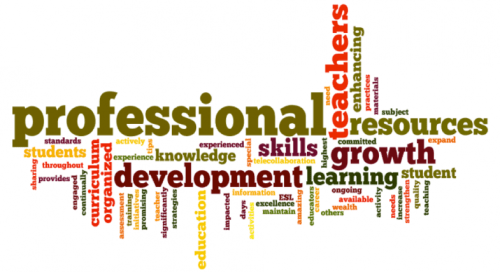 Recently, as I was tweeting about the need for teachers to be more aware of what was going on within their profession an unexpected tweet response came from a connected educator who I greatly respect and hold in high regard. He tweeted that he was tired of the teacher bashing. I was upset for that was the furthest thing from my mind as I tweeted my opinions out.
 about teaching is that teachers not only need to be masters of content within their subject area, but they must also be masters of education as a subject. Another undeniable fact is that neither of those subject areas looks the same as when any teacher first mastered them. One effect of the integration of technology into our society is that change in almost everything is happening at a pace never before experienced by mankind. As much as some people may yearn for the simpler times of the past, life will continue to move forward as the natural order of society requires.
 The worst advocates for educators using social media for do it yourself professional development are those educators who have been successful developing their own do it yourself professional development. This probably applies to other successful educator undertakings as well. Many of those educators who achieve success with innovative ideas tend to expound on the achievements and benefits of their strategy, method, or project, which tends to overwhelm those educators exposed to it for the first time. This alone, seems to scare off some educators to even being open to considering change.








 My Island View